Dear Diary (Homelab edition)
7 Oct 2026
I wanted to do a dear diary post before too much more time goes past. I’ve been working on several projects that have been published, such as Activity Relay and Activity Relay Directory, and I have a couple WordPress plugins that about ready to be published as well.
With feedback from my parents, who are on a slower internet connection, I used AI to build a plugin that renders raw video into much more streaming friendly formats – the ArgentWolf Video Processor (AWVP) plugin. Version 1.0 does all of the rendering on server, so for if you are self hosted like myself, it’s nice to use your hardware to do the rendering and it doesn’t require any API tokens or subscriptions.
The next level, and continuing my efforts to explore the Fediverse (a term that refers to open, free, and distributed social media), is leveraging PeerTube. I set up a PeerTube instance at https://video.argentwolf.org, where you can check out recent videos that I’ve uploaded to the blog. PeerTube has a couple nice features, such as automatic captions, transcoding, better streaming options, and the ability to use ‘runners’ to do these jobs. Runners are clients on various computers that do a job and part of the processing, and now that we have a couple additional computers around for the kids, I’ve set up runners on their workstations, so when they are idle, which is most of the time, they can be useful for other things.
You will notice that the videos here recently are served up a bit differently. They are embedded from the PeerTube instance, and not WordPress’ native video interface. AWVP 2.0 allows me to do all my video uploads through WordPress, configure the metadata, and send it to the runners for transcoding without leaving WordPress’s editor interface. AWVP 2.0 is in the Release Candidate (RC) status right now, and as I get through my backlog of posts and test it a bit more, I expect to publish the new version soon, perhaps this weekend or next week.
Work continues on another plugin, Argent Wolf Post Notifier, which will fill a gap I have of properly notifying users of new posts, again in a proper self hosted manner without external services.
One of the annoying things about WordPress, and enabling user registration is the spam bots hammmering your site. So, time for another plugin! Argent Wolf Access Guard is designed to thwart these bot attempts. No captchas or other things necessary. So far, it has blocked nearly 1,000 attempts to create a spam account on the site. This protection also leverages my Argent Wolf Email Verification Plugin, which, if a spam account does register, it is prevented from fully activating the user until a verification email is clicked. And since they don’t use real email addresses, they never verify, and the accounts are deleted after seven days.

This will also tie into the over watch program, Argent Sentinel (not a WordPress Plugin), which can block the offending IPs at the firewall automatically on configured servers. This is a self learning and protecting methodology across all protected hosts to defend against malicious IPs/hosts.
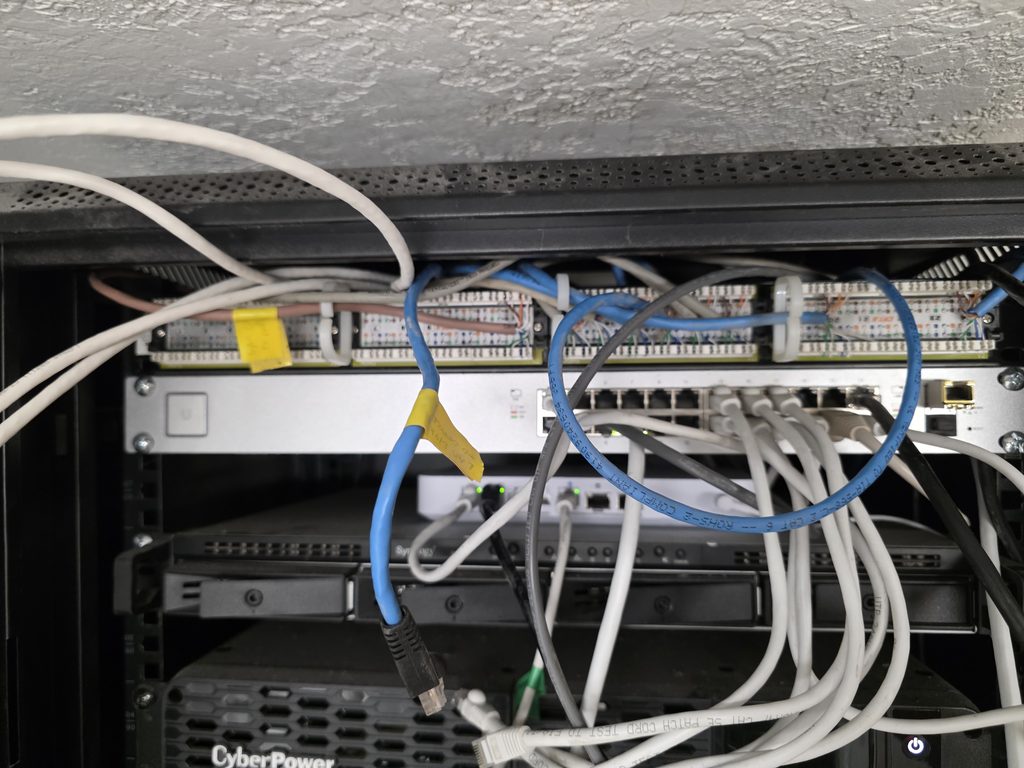
The home network continues to grow and be refined. I have set the kids up with workstations on Ubuntu connected to a SAMBA domain controller, and leveraging ZFS, they can log into any computer and have their profile and home directory synchronized via ZFS snapshots. The practical effect is that they can go to any workstation, log in, and it is transparent to them which computer they are on, compared to my experience with Windows machines where the profiles didn’t truly roam and when you saved things on a computer, they didn’t necessarily follow you unless you saved it on your embarrassingly small network drive.
I’ve also gotten into the Minecraft hosting business. A client wanted a Minecraft server set up for their group, so I had some extra capacity on the server, and set that up for them. I also set up a family Minecraft server using Pterodactyl and Wings. Pterodactyl is the control plane and Wings are the ‘nodes’ that run the server. I put the family Minecraft server on one of the workstations, and that has been working out well. That way the kids can leverage what I set up for the infrastructure, without impacting the server. I bought the workstations bit higher spec just for this purpose.
With the software releases I’ve been doing, I make announcement posts. When the posts on the blog are reshared by my Friendica (https://friendica.argentwolf.org/profile/alan/conversations), the server gets a lot of traffic in a big burst. Friendica (and PHP) didn’t handle that so well, so yesterday I, with the help of my AI tech support, set up caching on Nginx which has greatly reduced that problem. We had to make sure that the caching only affected some of the Friendica endpoints, and not the other parts which should not be cached. This allowed me to unblock the GoToSocial clients which, for whatever reason, really liked to hammer the instance and previously caused PHP timeouts/overloads.
GitHub had an outage on their runners a while back, so not to be deterred, I now have my own Forgejo instance (a self hosted GitHub replacement), which I am slowly migrating all of the projects over to it. One of the nice things, is that like PeerTube, it uses runners to do the jobs and can take advantage of the additional available workstations to quickly process jobs in parallel and much faster than what is provided by GitHub (for free, anyway) to do the various code actions and build the packages.
I’ve also taken to making a couple tweaked docker images for Jellyfin. Jellyfin is the media server software that allows us to stream our videos and music to devices. There are two issues that have come up. One is that with a relatively large library, the SQLite version of Jellyfin tends to crash and get hung up, which is inconvenient and it only does that when I’m away and the wife needs it to work so the kids will leave her alone. Switching to the experimental PostgreSQL edition, a much more robust database back end, fixed that problem. FFMPEG, which Jellyfin uses, recently had a security vulnerability, which while fixed in newer editions of Jellyfin is still present in the operational PostgreSQL editions. So I made some images that use a fixed (I’d say patched, but we just disabled the offending codec which caused the remote code execution CVE). Then there is a bug having to do with time precision, where PostgreSQL is more precise than the SQLite version, resulting in every library scan to reflect several thousand updates when nothing actually changed. This was fixed in later editions, 12.2, but that version isn’t ready yet with the PostgreSQL integration. So I backported that fix to 10.11.11 and built an image with all the fixes. Those can be found here: https://github.com/thystra/jellyfin-security-images The awsec2 images currently have those fixes in them.
I have a couple other projects in work – a maintenance tracking app for Nextcloud and a home school management program, but those are still early. Right now I’m focusing on finishing the infrastructure build out and protective measures for the spam bots and performance tuning.
So, the work continues and I’m now working through my backlog of posts while getting through these infrastructure updates, here at the homelab of Theseus. Between the homelab, homeschool, homesteading, sports, Scouts, and other activities, dull moments are rare around here!
That’s about it for now. My journaling time is done, and I have a bunch of chores and things to do! Until next time!